
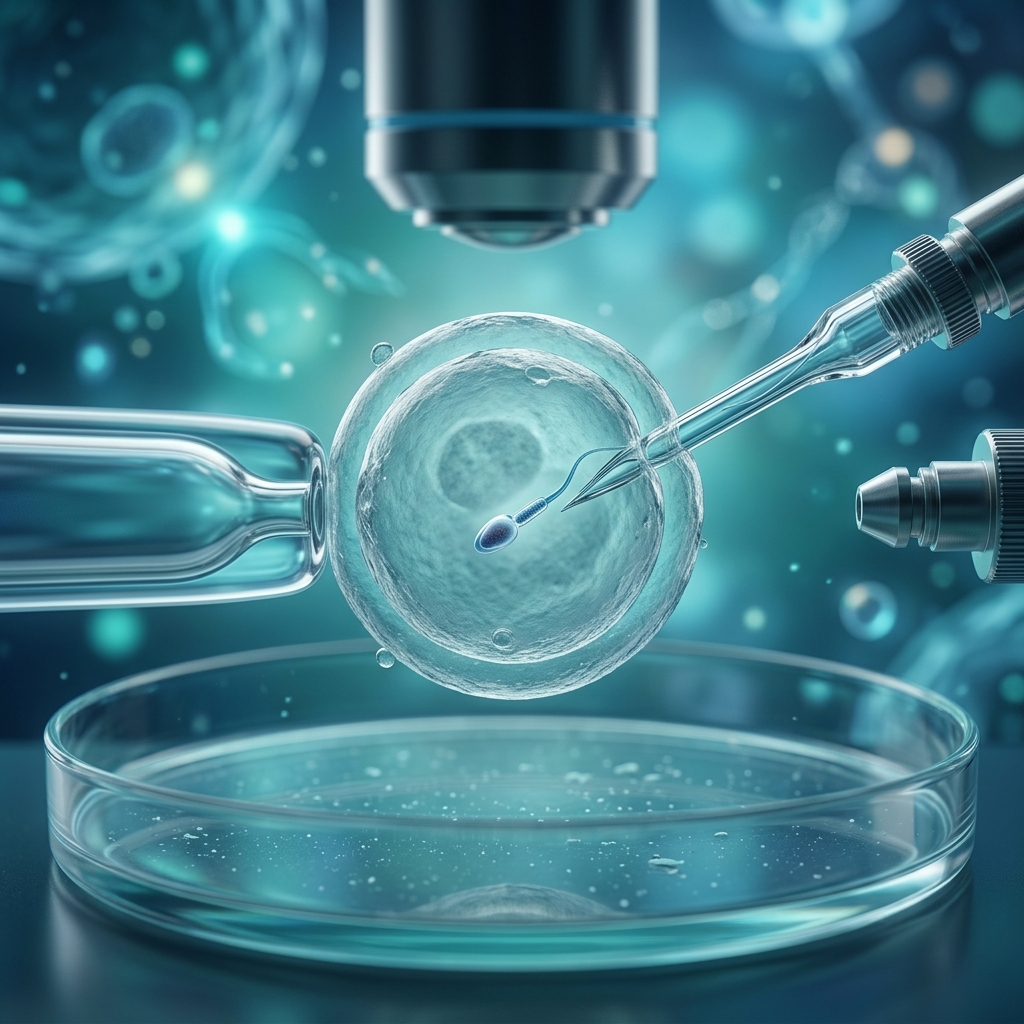
What is ICSI?
Intracytoplasmic Sperm Injection (ICSI) is a highly specialized IVF technology used to overcome severe male infertility. Under a high-powered microscope, a single healthy sperm is carefully selected, immobilized, and directly injected into the center of a mature egg. This bypasses the natural fertilization barriers.
Doctor's Note
"ICSI is a true marvel of modern medicine. It gives hope to couples facing severe male-factor infertility, ensuring that the critical step of fertilization is achieved with absolute precision." - Dr. Niveditha
Who Recommended for ICSI?
Learn More (Videos)
Frequently Asked Questions (ICSI)
In standard IVF, sperm and eggs are placed in a dish together to fertilize naturally. In ICSI, a single sperm is manually injected into the egg to ensure fertilization.
ICSI typically has a fertilization rate of 70% to 80% per mature egg injected.
Studies show that the risk of birth defects is only slightly higher than natural conception, similar to standard IVF, and is often related to the underlying cause of infertility itself.